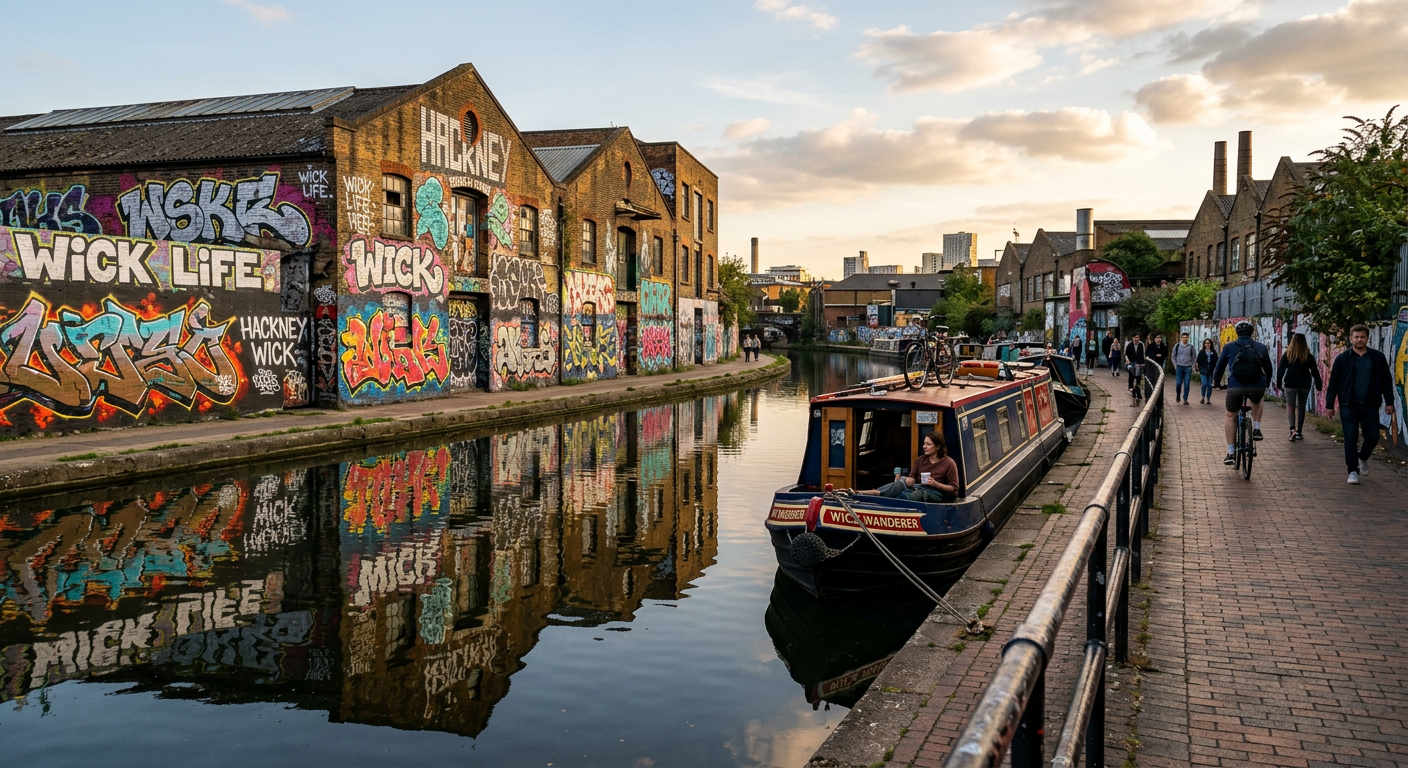
Hackney Wick Street Art
About Hackney Wick Street Art
A former industrial area beside the canal and the Olympic Park. It is known for large graffiti on warehouse walls, artist studios and canalside bars.
History
Hackney Wick was a centre of manufacturing for over a century. When the factories closed, artists moved into the empty warehouses and the area gained one of the highest numbers of artist studios in Europe.
Graffiti writers painted the canal walls in the run-up to the 2012 Olympics, and many of the area's walls are still repainted regularly.
What to Expect
Walk the canal towpaths and the streets around Hackney Wick station. The area is still changing as new flats go up, so some walls have gone, but plenty of colour remains. Combine a visit with a drink by the water or a walk in the Olympic Park.
Known For
Highlights
- Murals along the Hertford Union Canal and the Lee Navigation
- Painted bridges and warehouse walls
- Canalside bars and breweries
- Next to Queen Elizabeth Olympic Park
Frequently Asked Questions
- Is Hackney Wick worth visiting for street art?
- Yes. It has some of the largest graffiti in East London, mostly along the canals and around the station.
- How do you get to Hackney Wick?
- Take the Overground to Hackney Wick station. Stratford station is also about a 20-minute walk through the Olympic Park.
- Can you walk from Hackney Wick to the Olympic Park?
- Yes. Queen Elizabeth Olympic Park is a few minutes' walk from Hackney Wick station.
More London Street Art & Graffiti
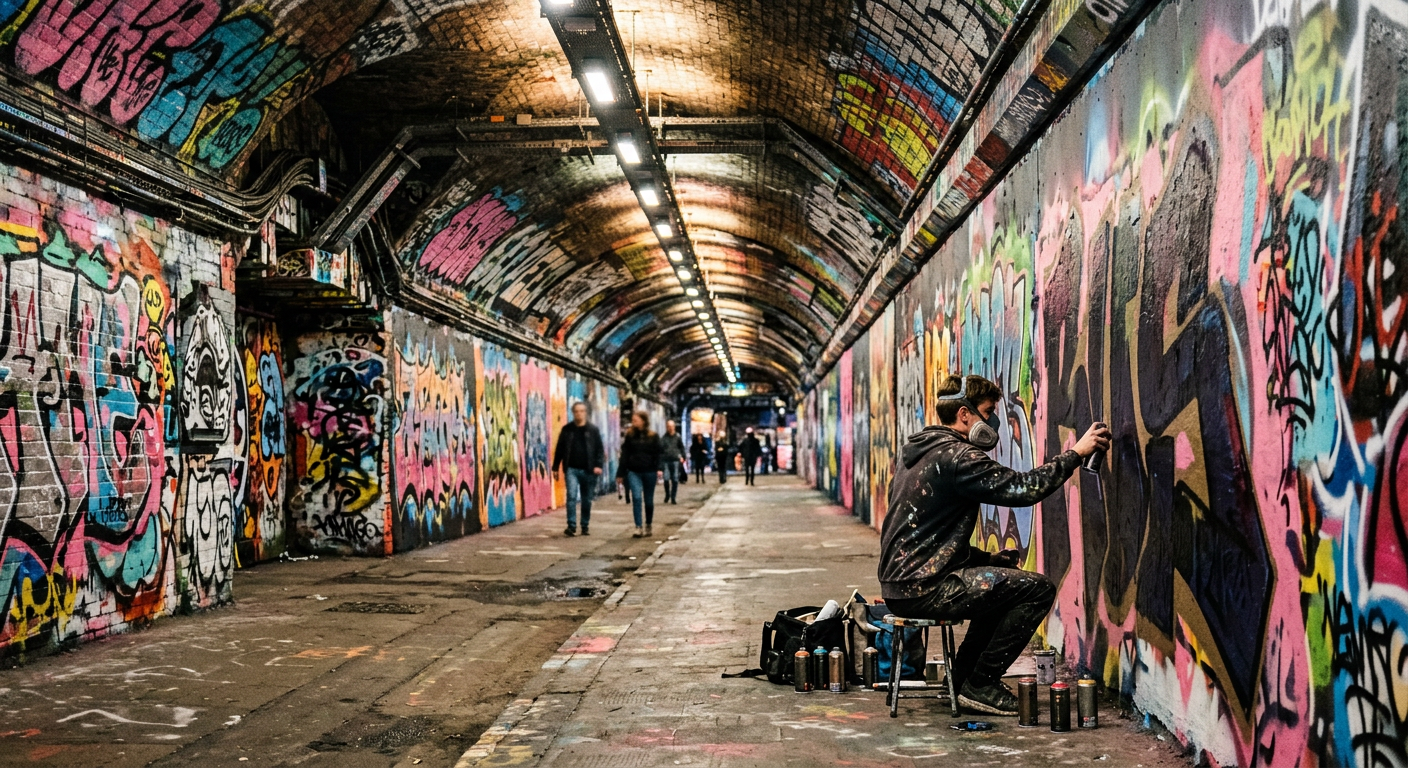
Leake Street Arches
A 300-metre tunnel beneath Waterloo station where graffiti is legal. Every wall is covered in spray paint, and the pieces change almost daily.
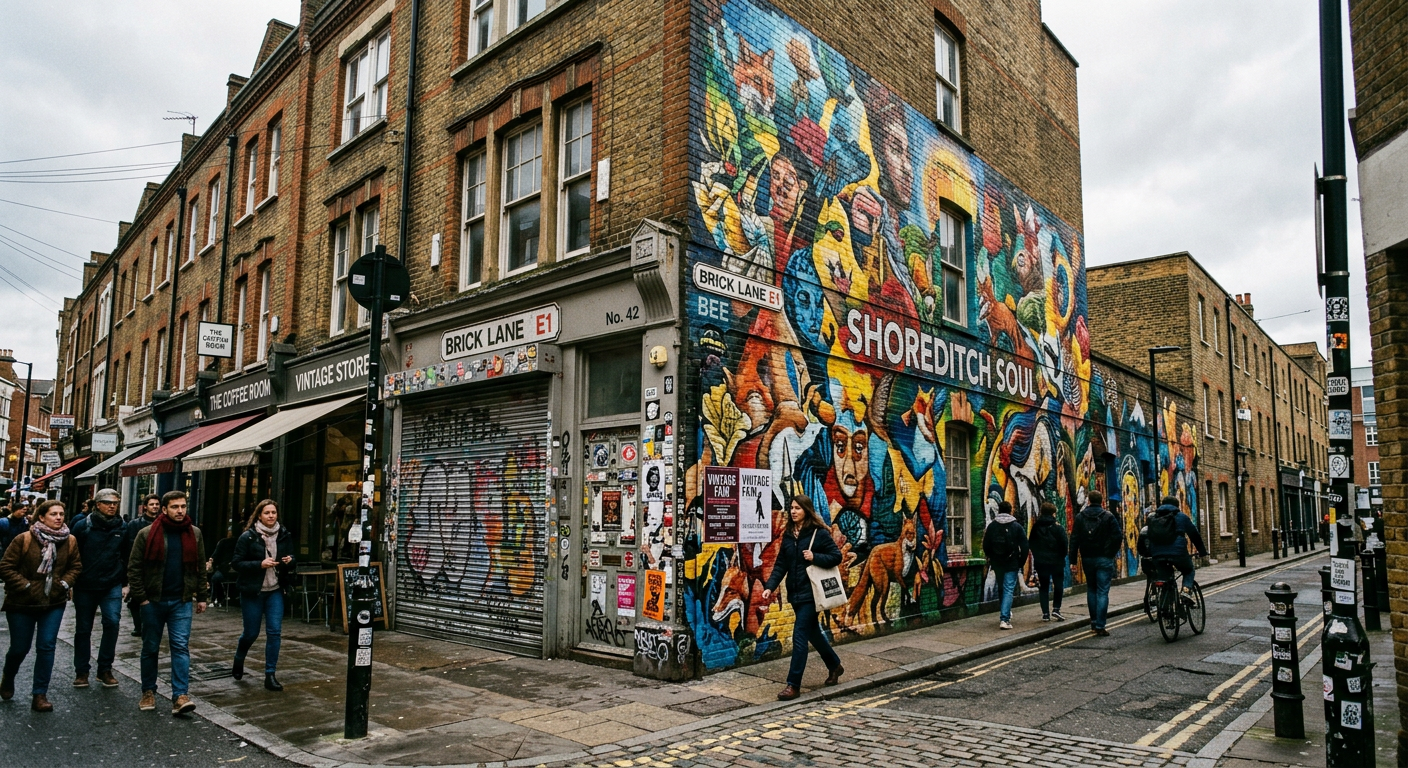
Shoreditch & Brick Lane Street Art
London's best-known street art district. Large murals, paste-ups and small pieces cover the side streets around Brick Lane and Shoreditch High Street.
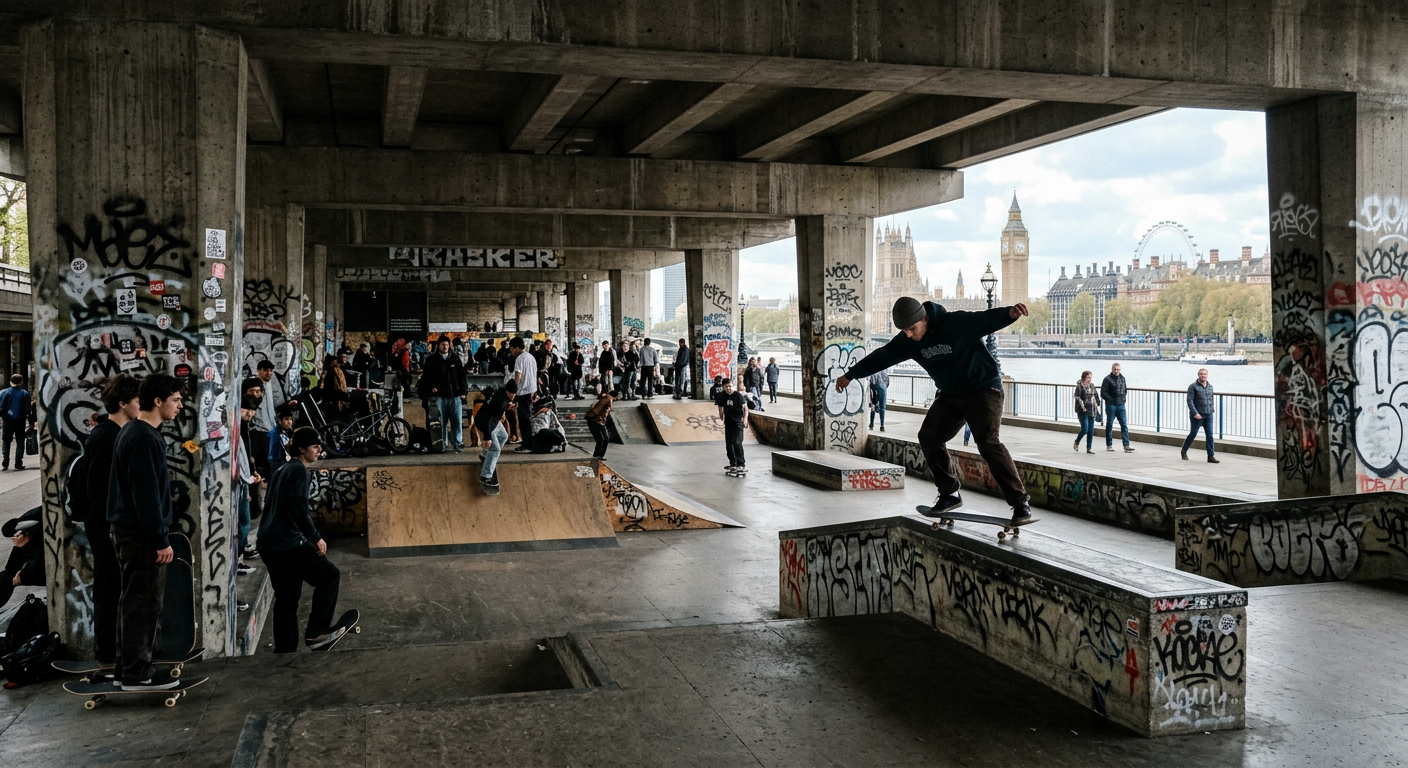
Southbank Centre Undercroft
A covered concrete space under the Southbank Centre on the Thames. It has been used by skateboarders since the 1970s and is covered in graffiti.