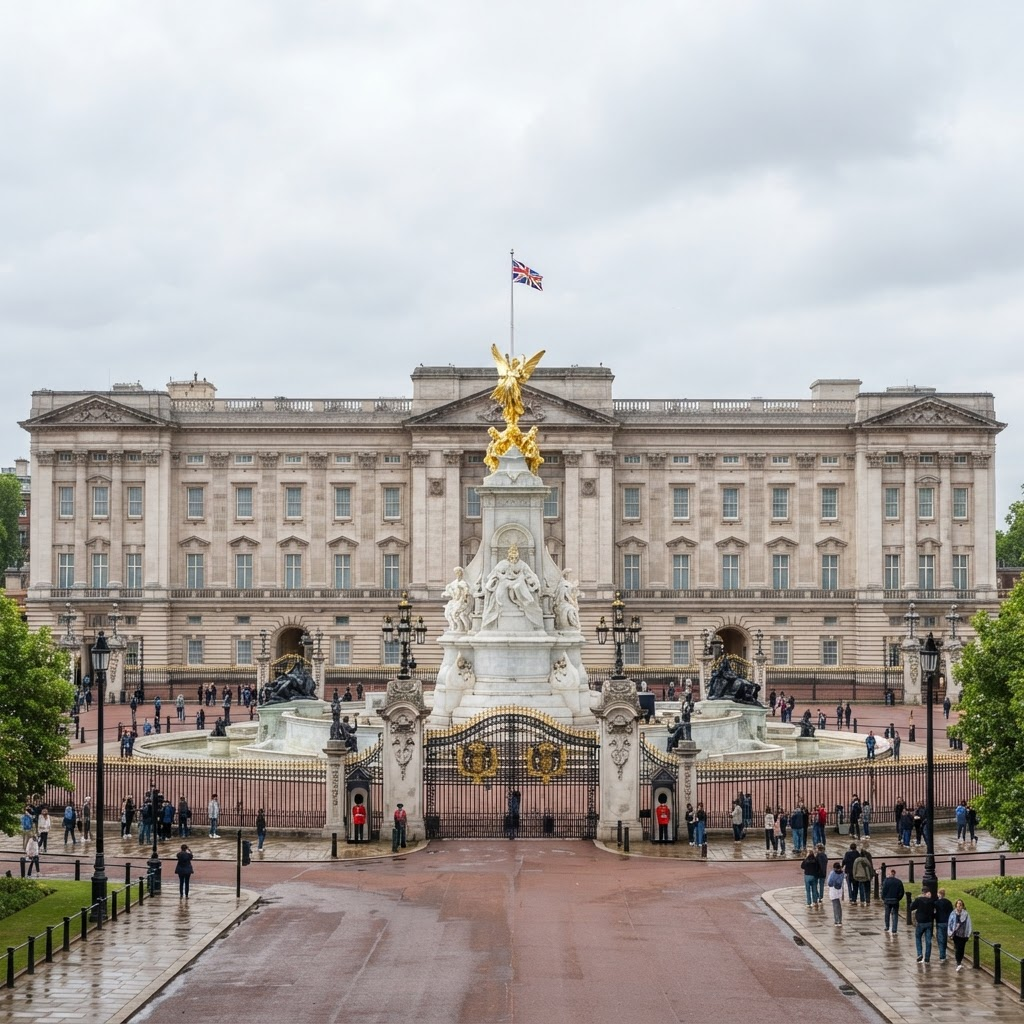
Buckingham Palace
About Buckingham Palace
The London residence and administrative headquarters of the British monarch, famous for its balcony appearances, the Changing of the Guard ceremony and the opulent State Rooms opened to visitors each summer.
History & Heritage
The building began life as Buckingham House, a large townhouse built for the Duke of Buckingham in 1703. King George III acquired it in 1761 as a private residence for Queen Charlotte, and over the following decades architects John Nash and Edward Blore transformed it into a palace. It became the official royal residence in 1837 when Queen Victoria became the first monarch to live there.
The famous east front with its balcony was added in 1847 and refaced in Portland stone in 1913, creating the facade known worldwide today. The balcony has been the setting for countless historic moments, from wartime celebrations to royal weddings and jubilees. The palace has 775 rooms, and its 39-acre garden is the largest private garden in London.
What to Expect
Expect ceremonial pageantry and grand state architecture at the head of The Mall. The Changing of the Guard takes place outside the railings on set days and draws large crowds, so arrive early for a good view. In summer, when the monarch is away, the lavish State Rooms open to ticketed visitors, displaying works by Rembrandt, Rubens and Canaletto. The Royal Mews and the Queen's Gallery are open for much of the year.
Known For
Highlights
- Changing of the Guard
- State Rooms tour
- The Royal Mews
- Queen's Gallery
- Palace gardens
- The Mall approach
Frequently Asked Questions
- Can you go inside Buckingham Palace?
- The State Rooms are open to ticketed visitors during the summer opening (typically July to September) and on select dates. The Royal Mews and Queen's Gallery are open for much of the year.
- What time is the Changing of the Guard?
- The Changing of the Guard usually begins at 11am on selected days of the week. The schedule varies by season and weather, so check the official Household Division listings before visiting.
- How do you know if the monarch is at home?
- When the Royal Standard flag flies above the palace, the monarch is in residence. When the Union Flag flies instead, they are away.
More London Landmarks
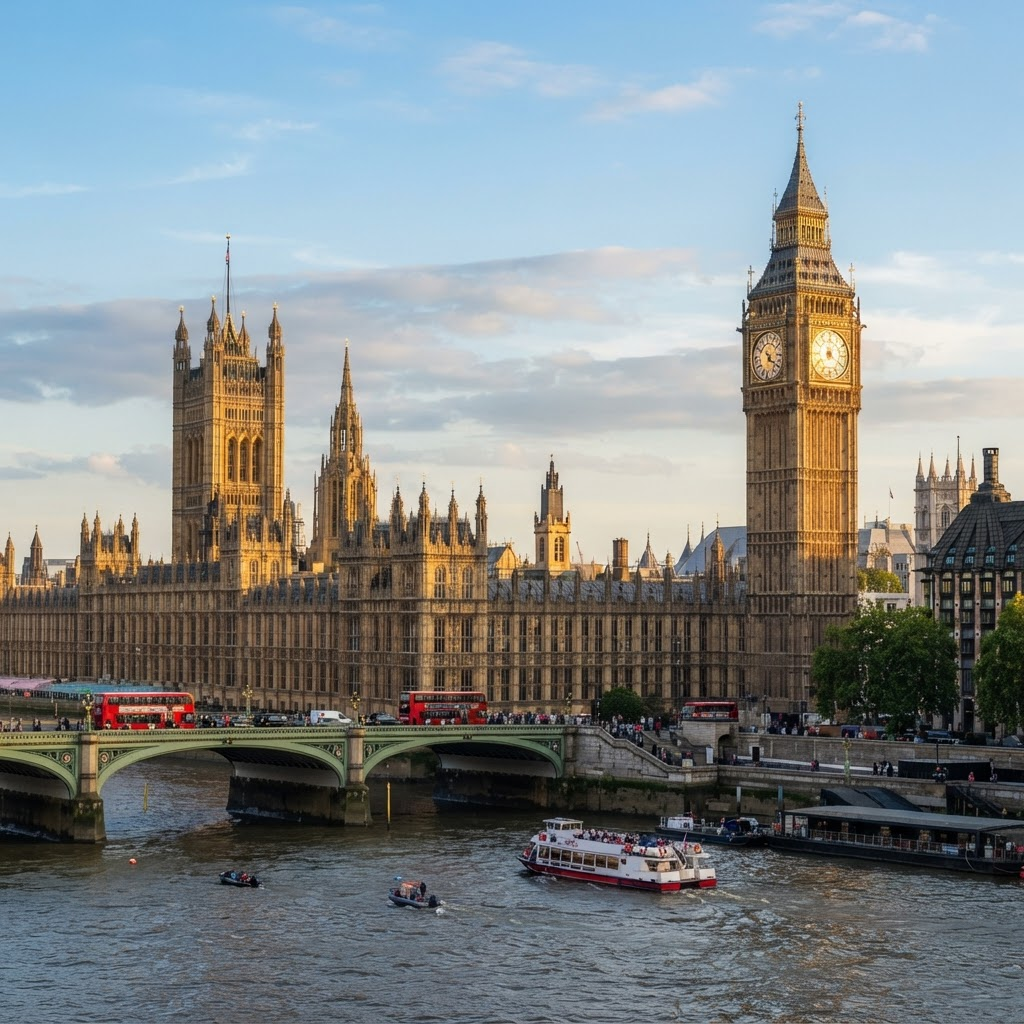
Big Ben & the Houses of Parliament
The iconic clock tower — officially the Elizabeth Tower — rising above the Palace of Westminster on the banks of the Thames, home to the UK Parliament and one of the most recognised silhouettes in the world.
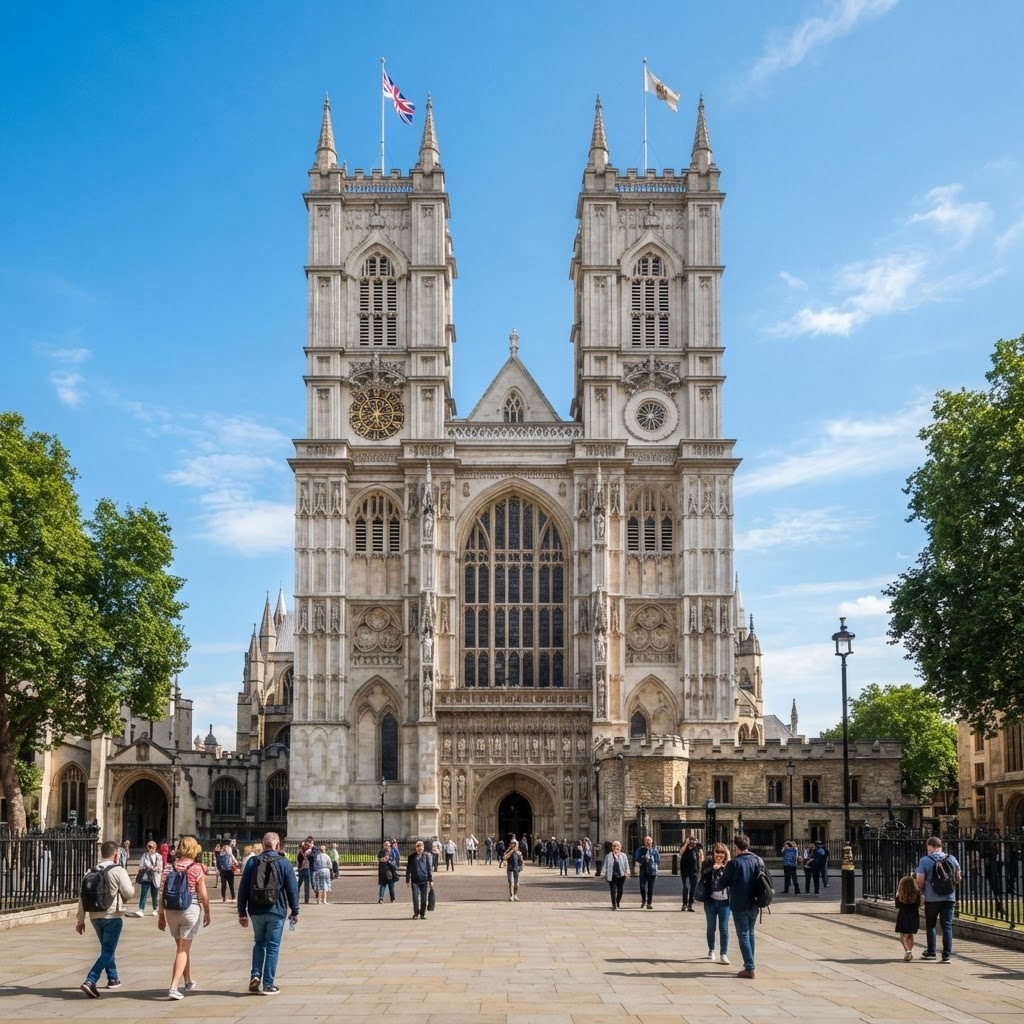
Westminster Abbey
A magnificent Gothic church and UNESCO World Heritage Site that has been the coronation church of English and British monarchs since 1066, and the burial place of kings, poets and scientists.
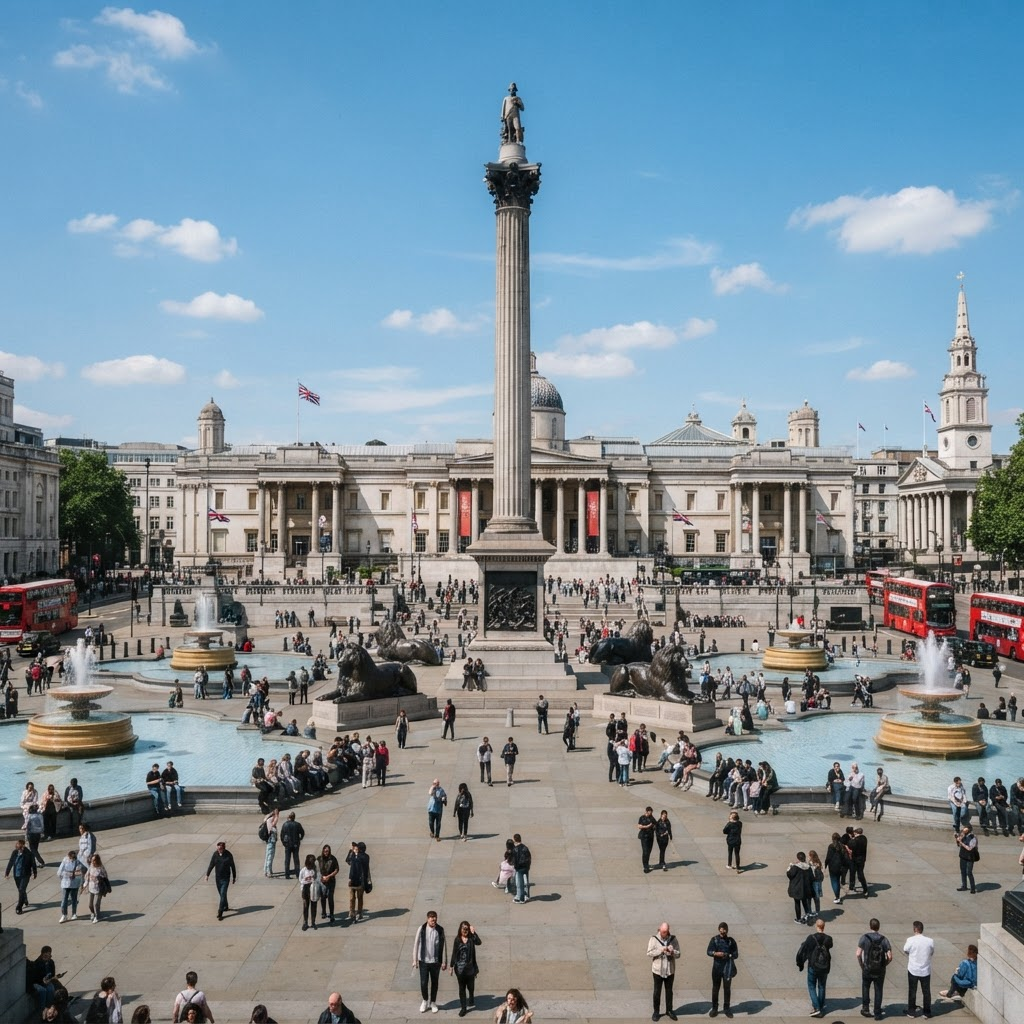
Trafalgar Square
London's grand civic square at the heart of the West End, dominated by Nelson's Column and its bronze lions, and framed by the National Gallery and the church of St Martin-in-the-Fields.